Every workout logged. Every goal achieved. Every small win.
These moments aren’t just data points. They’re signals of who your customers are, what motivates them, and how your brand can meet them in real time.
And that’s the key to how brands like Brooks and other athletic and outdoor brands are closing the customer experience gap: turning data into personalization that truly resonates.
In a world where every brand sounds the same, personalization has lost its power. Birthday emails, “you left something in your cart” reminders, and product recommendations based on last year’s purchase don’t cut through the noise anymore.
The truth? The biggest challenge in marketing today isn’t collecting more data, it’s collecting better data and using that data to close the Customer Experience Gap, a space between what customers expect and what your brand actually delivers across every interaction.
In this article, you’ll learn how brands are transforming wearable and lifestyle data into personalized engagement that feels authentic, not like another automated discount code.
Table of Contents
What is the Customer Experience Gap?
The Customer Experience Gap is the growing disconnect between what customers expect and the engagement brands actually deliver. For outdoor brands, it’s the space between personalized engagement based on online behavior and how they are actually living their lives in the real-world; running, training, travelling, exploring.
Despite massive investments in CRM, CDP, and automation platforms, most brands still miss the mark when it comes to connecting meaningfully between purchases.
The problem isn’t technology. It’s the data foundation their “personalization” is built on.
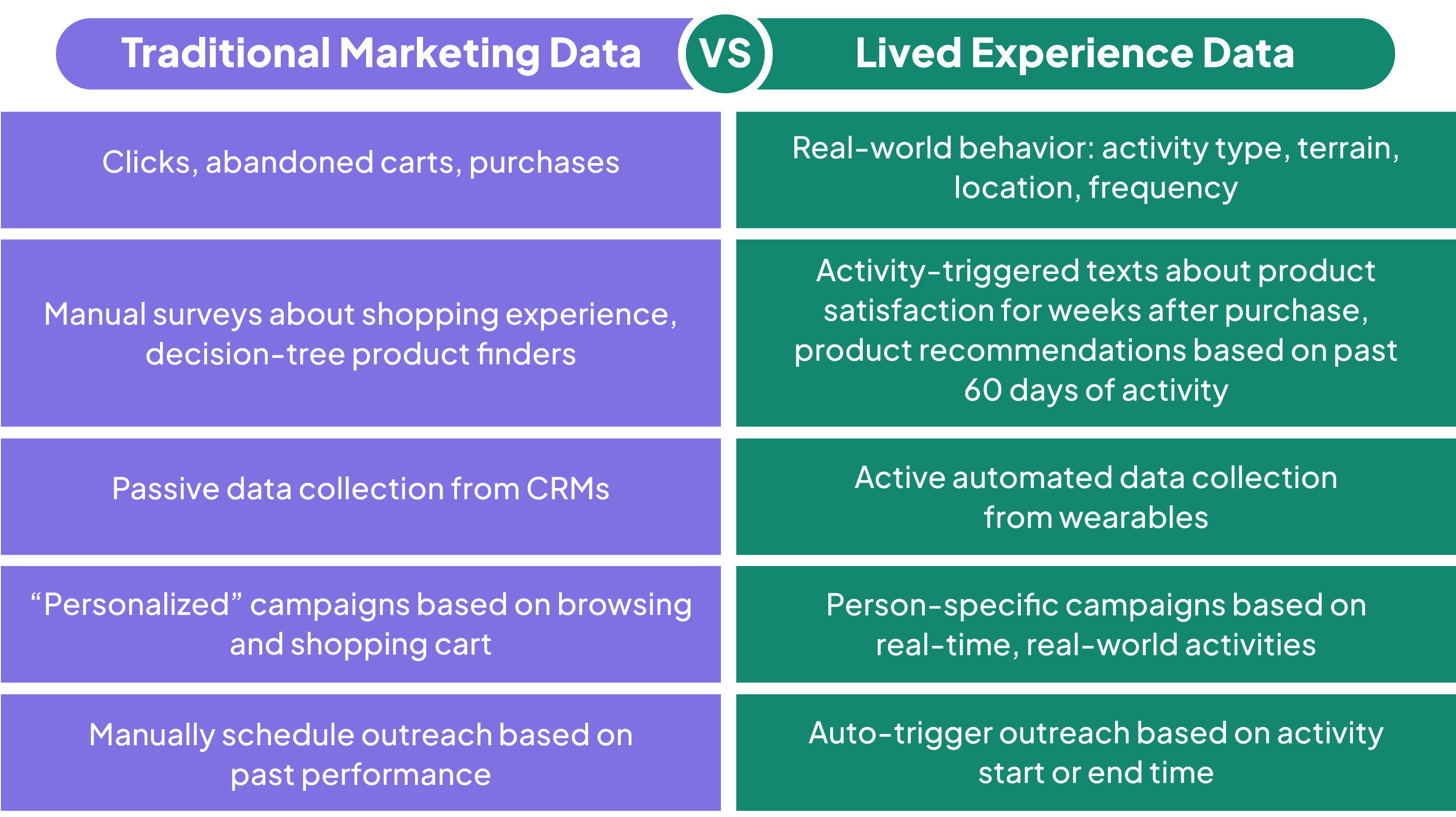
Most personalization today still relies on static, transactional data; what customers bought, when they clicked, or where they live.
That data might have been enough five years ago, but it only tells who your customer was, not who they are right now.
That’s where the Customer Experience Gap widens. In the “in-between” months when customers are living their lives, chasing goals, and making memories, while your brand isn’t there to notice.
This isn’t just another optimization play. It’s the new strategy for differentiation:
→ from digital data to lived experience
→ from automation to authenticity
→ from campaigns to community
The numbers are there to back it up:
For brands ready to close the gap, this is more than a marketing shift. It’s the path to authentic connection, differentiation, and long-term brand loyalty.
What’s Wrong With Personalization Today
Marketers today face a paradox: more data than ever, yet less clarity about who their customers really are.
The result: campaigns that sound like your competitors, messages feel predictable and repetitive, and offers are mistimed or irrelevant.
Customers want something more. They expect every interaction to feel contextual, timely, and relevant to their current reality, not just their purchase history.
82 % are willing to share data for a more customized experience.
This disconnect creates three costly outcomes:
- Lost Relevance: Messages and offers that don’t reflect who your customers are right now lead to lower engagement, weaker retention, and fewer repeat purchases.
- Missed Differentiation: When every brand uses the same data, personalization starts to sound the same. LX Data gives you a new layer of insight to stand out with hyper-personalized messaging competitors can’t replicate.
- Eroding Loyalty: Customers gravitate toward brands that “get” them and stay longer with those that show up at the right time, with relevance and authenticity.
Example:

Personalization with Digital Data
Hey Sally! New release of running gear perfect for running in Florida!
Sally moved to Colorado and switched to cycling months ago.

Personalization with Lived Experience (LX) Data
Nice work, Sally, 15 miles down the mountain! You’re halfway to your 35-mile goal. Here’s 25% off and gear recs tuned for your current terrain and temps.
LX Data layers wearable signals with context (terrain, weather, location) for precise, real-time relevance.
The Missing “In Between” Insight
Take a hard look at your customer data and insights right now. Then answer these questions:
- Who are your customers when they’re not shopping?
- How are they using your products after the purchase?
- When are they most likely to switch brands and what signals indicate it’s time to re-engage?
- What other products do you know they’d be interested in based on how they spend their time?
Most brands can’t answer these questions because their data stops at the transaction. But real loyalty isn’t earned at checkout, it’s built in the in-between moments.
How Wearable Data Closes the Customer Experience Gap
Personalization has evolved. Leading brands now drive measurable growth through experiences that react to real activity and context.
The next wave of competitive advantage lies in understanding how customers live, those post-purchase experiences, workouts, and achievements, not just what they buy.
That’s where Lived Experience (LX) Data comes in.
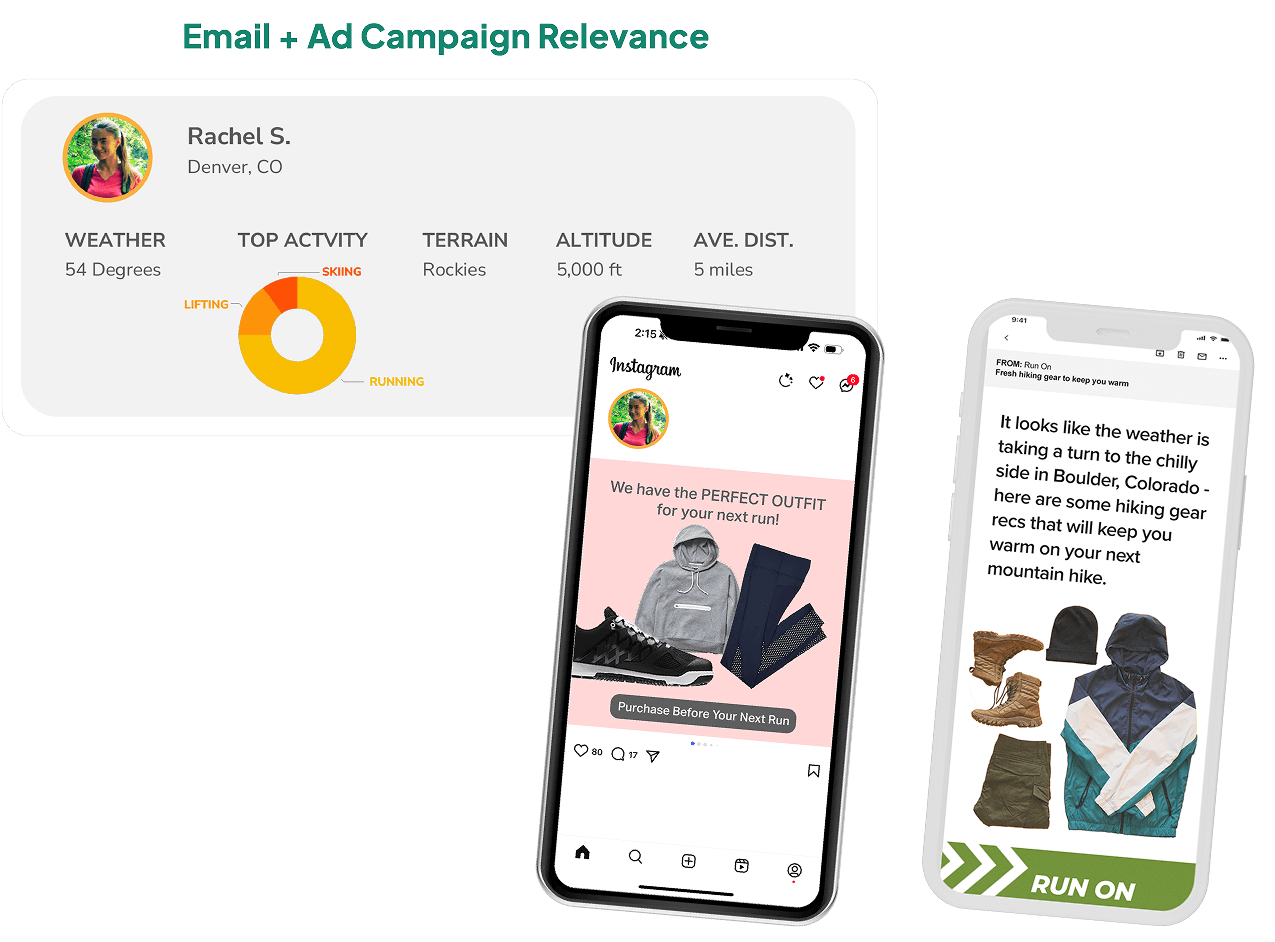
LX Data combines the activity customers choose to share from the apps and devices they already use with environmental context (like weather, terrain and elevation), turning activity into moments a brand can act on.
This gives brands the ability to understand customers as they move, train, and live in real time. And when connected with their SMS and email systems, LX Data allows brands to respond in the moment, with a hyper-personalized message based on real-behavior.
When DashLX triggers run in your email, SMS and loyalty tools, engagement becomes:
- Real-time: Triggered by real-world behavior.
- Contextual: Relevant to location, weather, and timing.
- Human: Rooted in genuine motivation.
Imagine sending a “Congrats on 25 miles this week!” message with an invite to a local running event, instead of another generic “We miss you” email.
That’s not just personalization. That’s connection.
The Right Data Mix for Human-Centric Personalization
To achieve meaningful personalization, brands need a complete data ecosystem, one that balances transactional, behavioral, and volunteered information.
- Purchase Data (baseline): The starting point for journey mapping and lifecycle triggers.
- Wearable Device Data (real-time): Know when customers finish a workout, hit a milestone, or shift activity types based on direct signals from devices.
- Lived Experience Data (holistic): Activity from the apps and devices customers connect, layered with context like weather and terrain, to show not just what customers do but when, where and how they like to do it.
- Customer-Shared Data (opt-in): Customers share goals and preferences in exchange for better experiences, which strengthens consent and trust.
What Is Activity-Based Personalization?
Activity-based personalization uses what customers do after they buy, like a first trail run, a 100-mile week or a switch from road to trail, to decide when to send a recommendation, message or reward.
Most brands go quiet after checkout.
With DashLX, customers choose to connect the apps and devices they already use, your team picks the moments that matter, and DashLX sets up the triggers so each message lands when it's relevant.
With LX Data, marketers gain visibility into what happens after the sale, transforming real-world activity into real-time action.
4 Use Cases for Personalization with Lived Experience Data
LX Data lets you personalize around how customers actually live, increasing engagement rates, repeat purchases, and CLV. Below are four examples of how the biggest brands are turning LX Data into personalization.
1) Product Recommendations Tied to Real-World Activity
78% of consumers say personalized communication makes them more likely to repurchase
— McKinsey
Digital-only recommendations get stale fast. LX Data keeps them fresh and useful:
- Email new thermal gear ahead of a cold snap or when their plane lands in a new location.
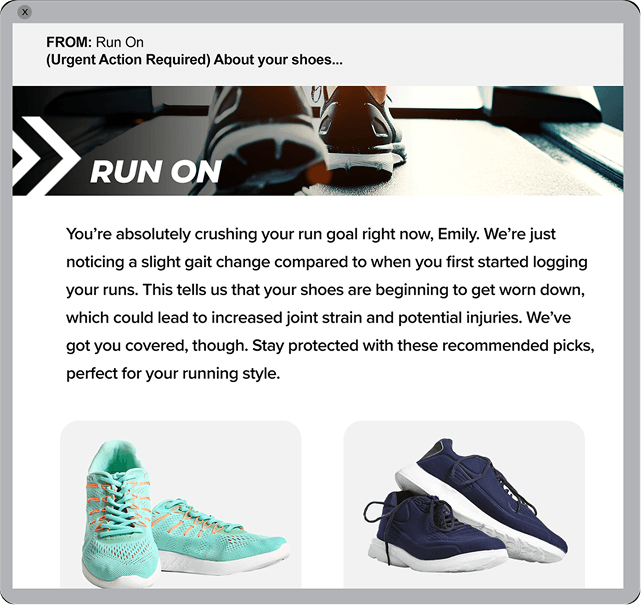
- Recommend trail shoes after a week of mountain runs with the right tread, weight and waterproofing that match how they run.
- Trigger a “25-mile week” congrats email with relevant gear or a congrats when they’ve successfully stuck to a new workout regimen for three weeks straight.

Result: Recommendations match what customers are doing today, not months ago.
2) Automated Engagement Triggered by Activity Behavior
Go beyond cart reminders or site visits. LX Data lets you engage at the perfect moment:
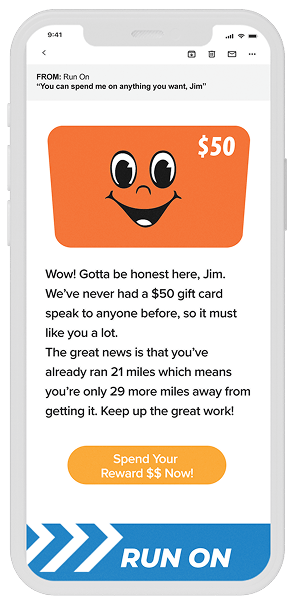
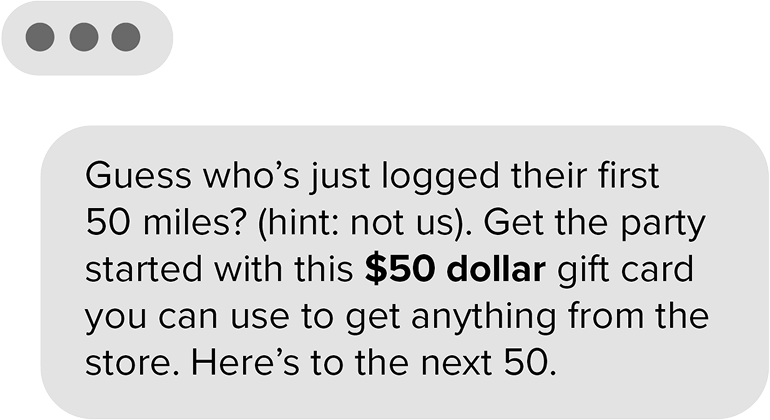
- Fire a congrats message the moment someone hits a milestone (e.g., 25 running miles) with a reward.
- Nudge lapsed athletes who went quiet for a month, plus refresh their gear picks.
- Detect a shift from running to skiing and adapt the content, offers, and products.
Results from the Brooks Run Club (members who opted in vs. those who didn't):
- +23% average order value
- +77% email open rates
- +333% click-through rate
3) Beyond “More Content”: Experiences That Actually Convert
40% of advertising budgets are wasted on the wrong audience
— Nielsen
Publishing more content won’t fix irrelevance. LX Data changes the experience instead:
- Targeted ads aligned to current activity and terrain.
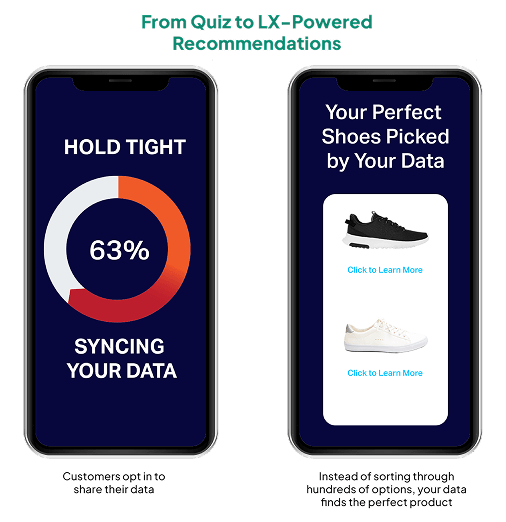
- Frictionless online shopping where recommendations reflect real activity, not quizzes.
- Lifestyle-fit recommendations that reflect goals and daily behavior.

Result:
Personalized content and recommendations that feel custom-built for every individual.
4) Turns Everyday Actions into Human Moments
Every “workout logged” or “goal achieved” is a micro-opportunity for connection. LX Data turns these everyday actions into authentic engagement moments that feel earned, not automated.
DashLX enables brands to transform real-world behaviors into human-centric interactions:
- Send personalized “you did it!” messages tied to real achievements.
- Trigger timely rewards when customers hit milestones or goals.
- Build community around shared passions, not just purchase history.
Personalization with Purchase Data vs. LX Data
Personalization with Purchase Data
Personalization with LX Data (Activity + Context)
“Time to buy running shoes again — it’s been almost a year.”
“100 miles in the books, Sally! Here are shoes dialed for those Colorado Rocky trails you’ve been running lately.”
New-release shoe ads based on age/gender or past browsing
Trail-shoe and cold-weather gear after LX Data shows a shift from California pavement to Colorado mountain terrain
“Congrats on one year! Here’s 10% off.”
“Congrats on your 50th workout this year! You’ve unlocked access to our next wear test.”
“Customers who bought this also bought that.”
“We’re seeing more hill work this month—these high-traction shoes can help on steep inclines.”
SMS the moment Sally crosses the NYC Marathon finish line; reward with free merch at the booth
Every touchpoint reacts to what customers are doing now, all year, not just when they shop. LX Data makes your recommendations smarter, your timing better, and your brand impossible to ignore.
Why Closing the Customer Experience Gap Drives Growth
Customers don’t want more messages; they want better conversations. They expect brands to understand them, anticipate their needs, and connect at the right time, in the right tone, on the right channel.
Brands that close the communication and personalization gaps see:
LX Data creates more than just personalized messages; it creates meaningful, real-time connections that turn every customer into a lifelong fan.
The future of personalization isn’t more automation. It’s real-time empathy powered by real-world data.
Conclusion
Brands that continue to rely solely on transactional or digital data will watch the Customer Experience Gap widen. The future lies in acting on what customers do between purchases, with their consent.
With DashLX, you can close the gap:
pick the moments that matter, trigger real-time engagement, and build loyalty from the in-between moments, not just at checkout.
FAQs
1. What is the Customer Experience Gap?
The customer experience gap is the distance between what customers expect from a brand and what it delivers between purchases. Most personalization runs on purchase history and clicks, so it reflects who a customer was, not what they're doing now. Brands close the gap by acting on current activity, like a milestone, a change in terrain or a long break, with the customer's consent.
2. How can brands personalize messages using customer activity?
Customers connect the apps and devices they already use and agree to what the brand will use the data for. The brand picks the moments that matter, like a first 50 miles or a shoe nearing replacement. DashLX then sets up triggers that send the right recommendation, message or reward through the brand's email, SMS, loyalty or ecommerce tools.
3. How is activity data different from purchase data?
Purchase data shows what someone bought. Activity data shows what they're doing now: how often they train, where, and in what conditions. That lets a brand time a message to a real moment instead of a calendar reminder.
4. What results do brands see from activity-triggered personalization?
In the Brooks Run Club, members who opted in saw a 23% higher average order value, 77% higher email open rates and 333% higher click-through rates than members who didn't. Messages and rewards arrive at moments that matter, so customers act on them.
5. Is activity data used for marketing consent-based and secure?
Every connection starts with the customer's consent and follows each data source's terms. Customers see what's used before they agree and can disconnect anytime. DashLX is SOC 2 Type II attested, with privacy controls designed to support GDPR and CCPA.