


Nobody’s going to share their watch data with a brand.
In loyalty programs built the right way, ~50% of members connect a device. In wear tests, ~85%. With a bare “connect your device” link, ~1%. Same technology, same customers. The difference is what you ask them to join and what they get back.
What we mean by "opting in": a customer connects their watch, fitness app, or phone to your brand and agrees to share their activity data with you. It takes about a minute, and they can stop anytime.
Watch how customers opt in
Three examples of where the flow can start. Every brand builds its own, from a loyalty challenge to a wear test application to a product finder, and the connect step stays the same.
A loyalty member joins a challenge
A member joins a "connect your device" challenge in the loyalty program, links their watch, and starts earning points for the miles they already run.
A participant joins a wear test program
A tester connects while applying. Their miles are verified automatically, and a survey arrives right after an activity is tracked.
A shopper finds the right shoe
A shopper uses a product finder, connects their watch, and gets gear recommendations based on how they actually run.
It comes down to how you ask.
Every brand connects customers through the same simple flow. The brands that get the most people to opt in do three things well.
Something worth joining
A program, challenge, or shopping moment only your brand can offer, where connecting makes every touchpoint personal to how they actually move.
Asked everywhere, more than once
Recruitment is ongoing, not a one-time email. Build the invite into every channel your teams own, from loyalty emails and checkout to product finders and wear test sign-ups.
A clear reason to say yes
Customers respond to being recognized, not marketed to. Reward the miles, milestones, and moments that matter to them.
Lead with what they get, not "connect your device."
When it's clear, the opt-in feels like an upgrade. When it isn't, it feels like a form. The reward doesn't have to be big. It has to be clear.
Opt-in rates depend on the three levers
In loyalty programs, we see opt-in rates as high as ~50% of members when all three are in place, and as low as ~1% with an ask alone. Wear test programs see the highest.
- Something worth joining: testers get new gear before it launches and help shape the final product
- A clear reason to say yes: free gear, early access, and nothing to log, since miles sync on their own and a survey arrives right after an activity is tracked
- Asked at the right moment: connecting is a step in the application, so every applicant sees it
- Something worth joining: connecting unlocks part of the program, like a monthly mileage goal, a members-only event, or early access
- A clear reason to say yes: members get a reward as soon as they connect, such as points, a perk, or first access
- Asked everywhere, more than once: the invitation runs across email, app, site, and checkout, and keeps running
- A single "connect your device" link at the bottom of emails
- Nothing to join, since the link isn't tied to a program or challenge
- No reward for connecting, so no clear reason to say yes
Loyalty opt-in is the share of loyalty members (not all customers) who connect. Wear test opt-in is the share of the invite list. Results vary by audience, offer, and channel. A planning guide, not a guarantee.
Put the ask where customers already are
The opt-in lives on your site and in your brand. Here's where brands place it.
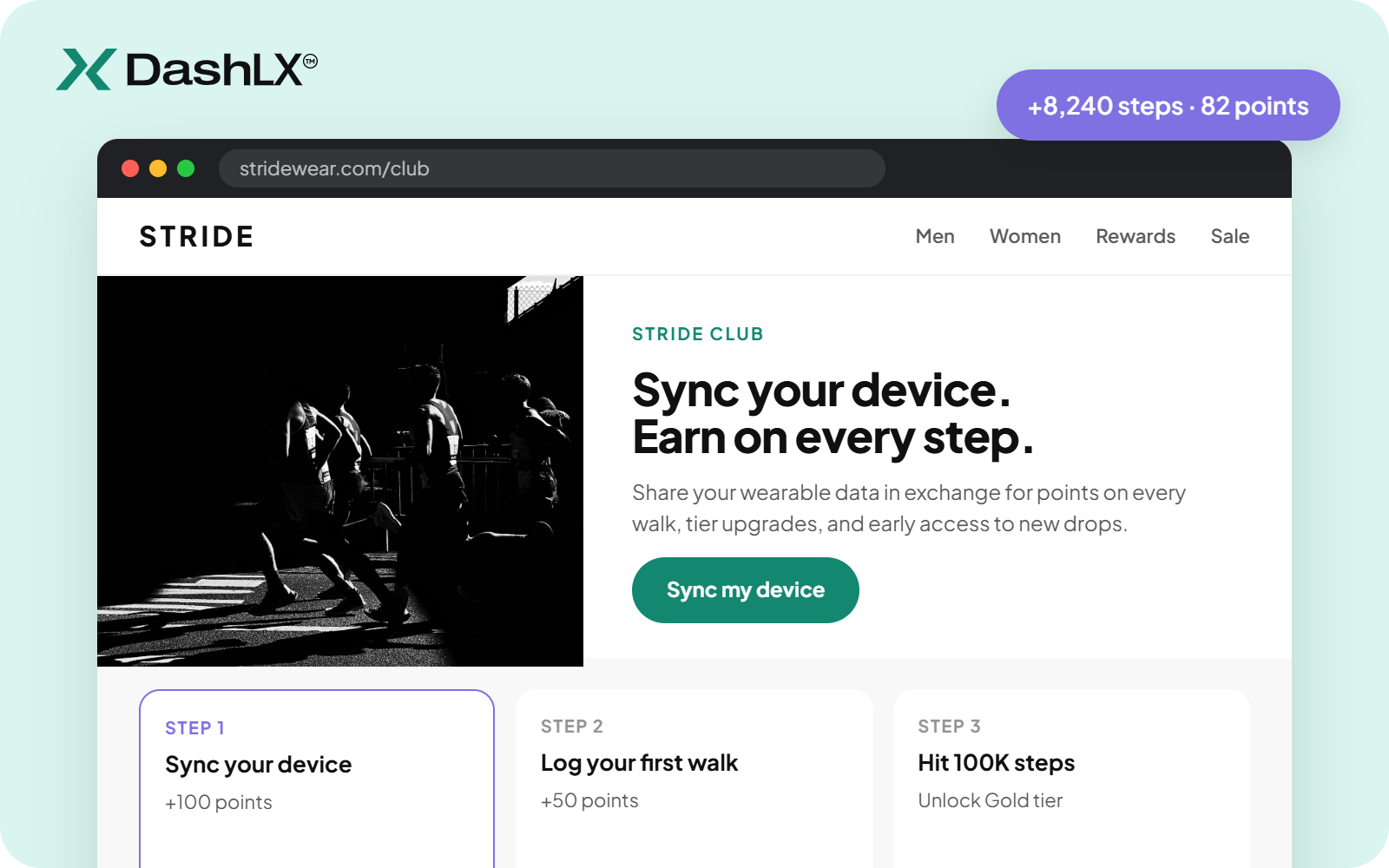
Loyalty program page
Members connect so their miles count toward rewards.
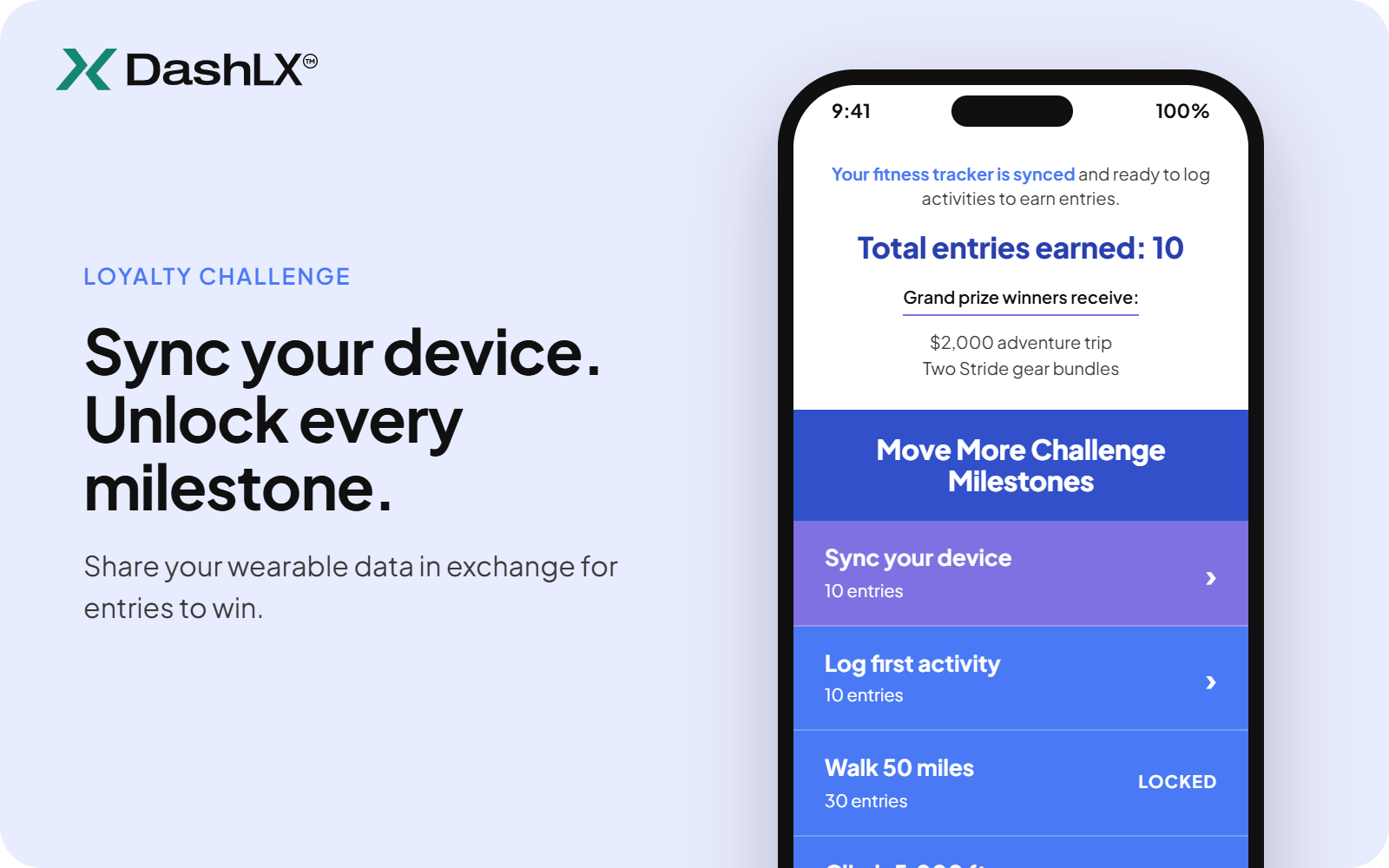
Loyalty challenge
Connecting is the challenge. Reward: a badge and a free app trial.
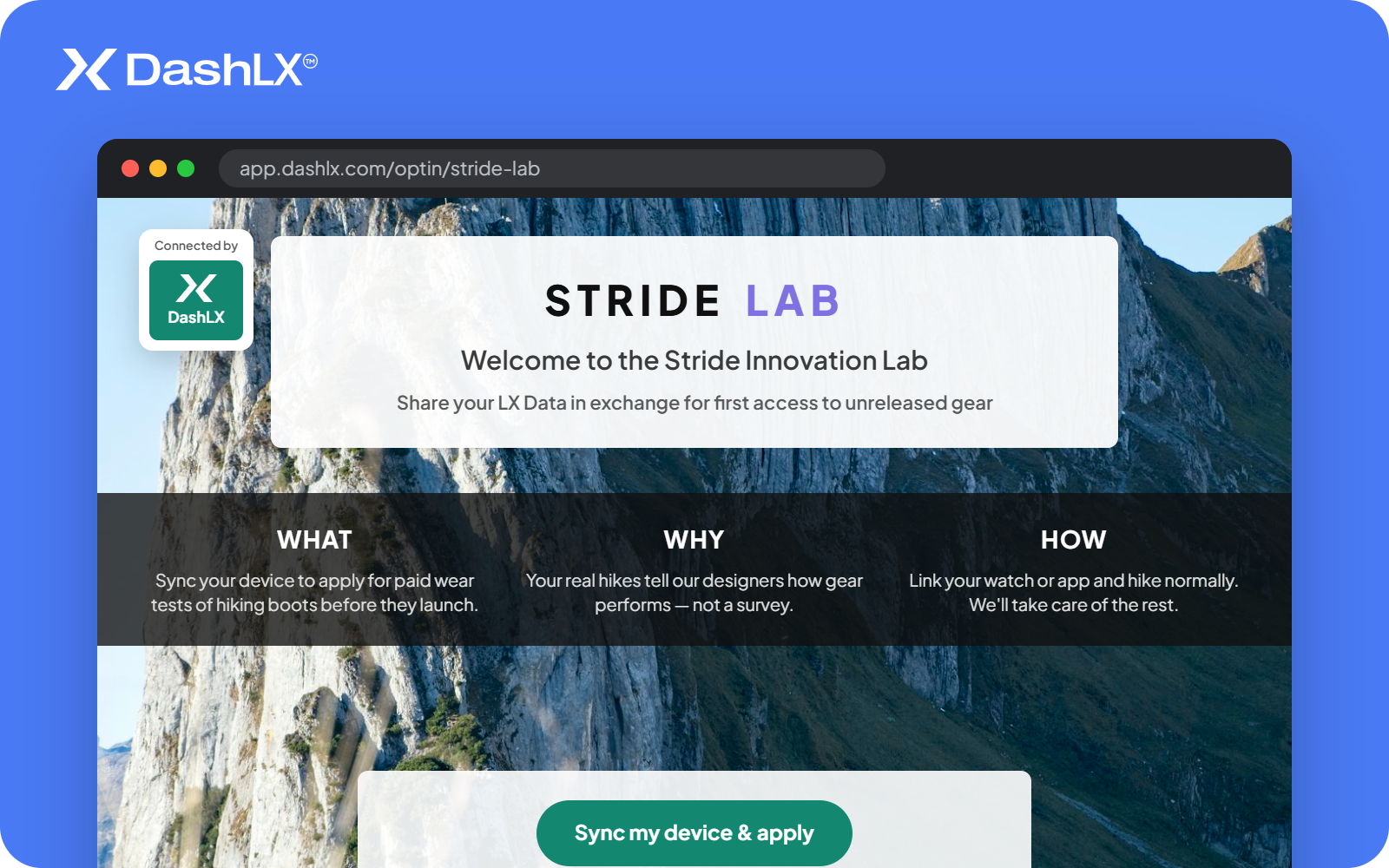
Wear test application
Testers connect as part of applying.
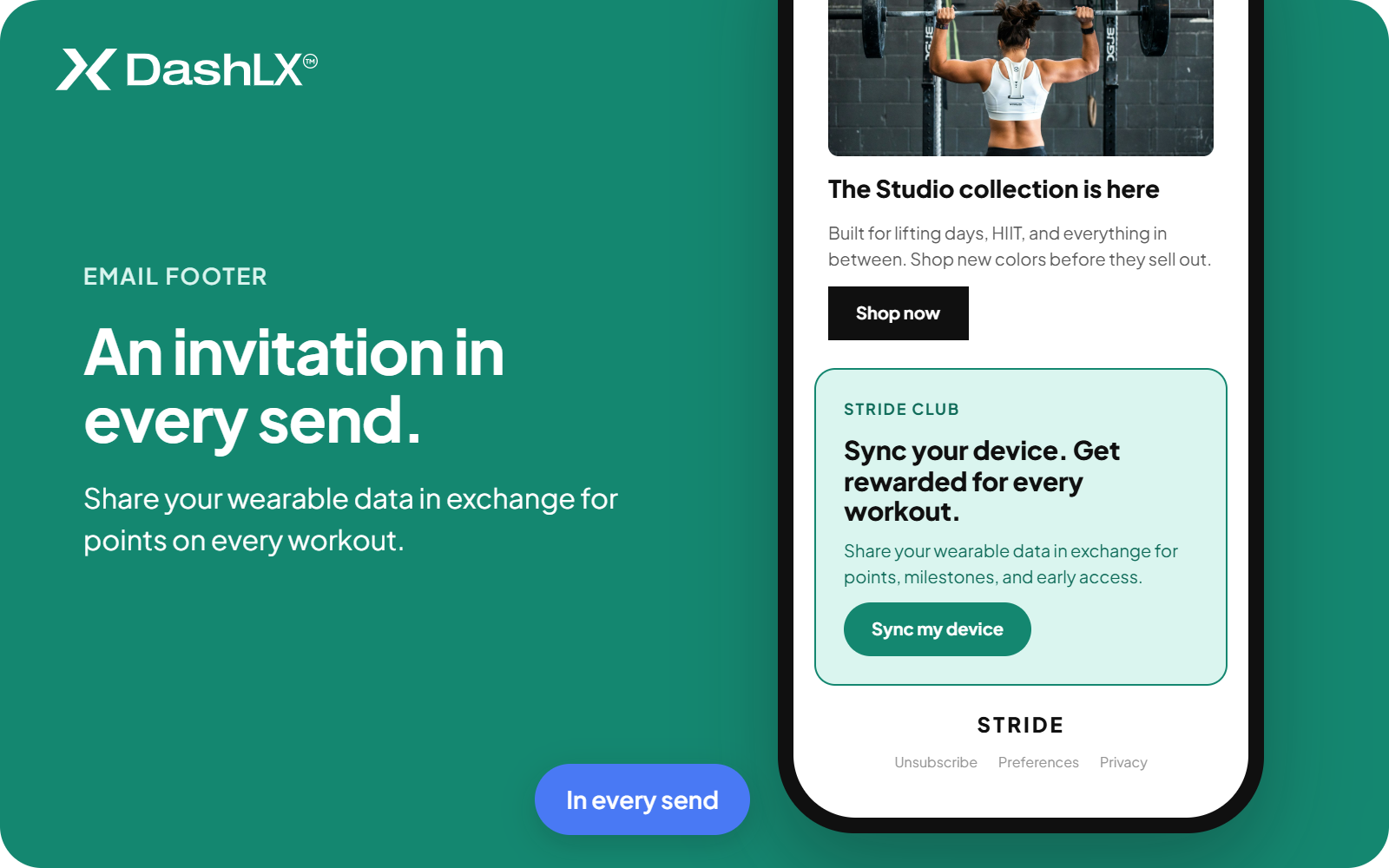
Email footer
A standing link in every send.
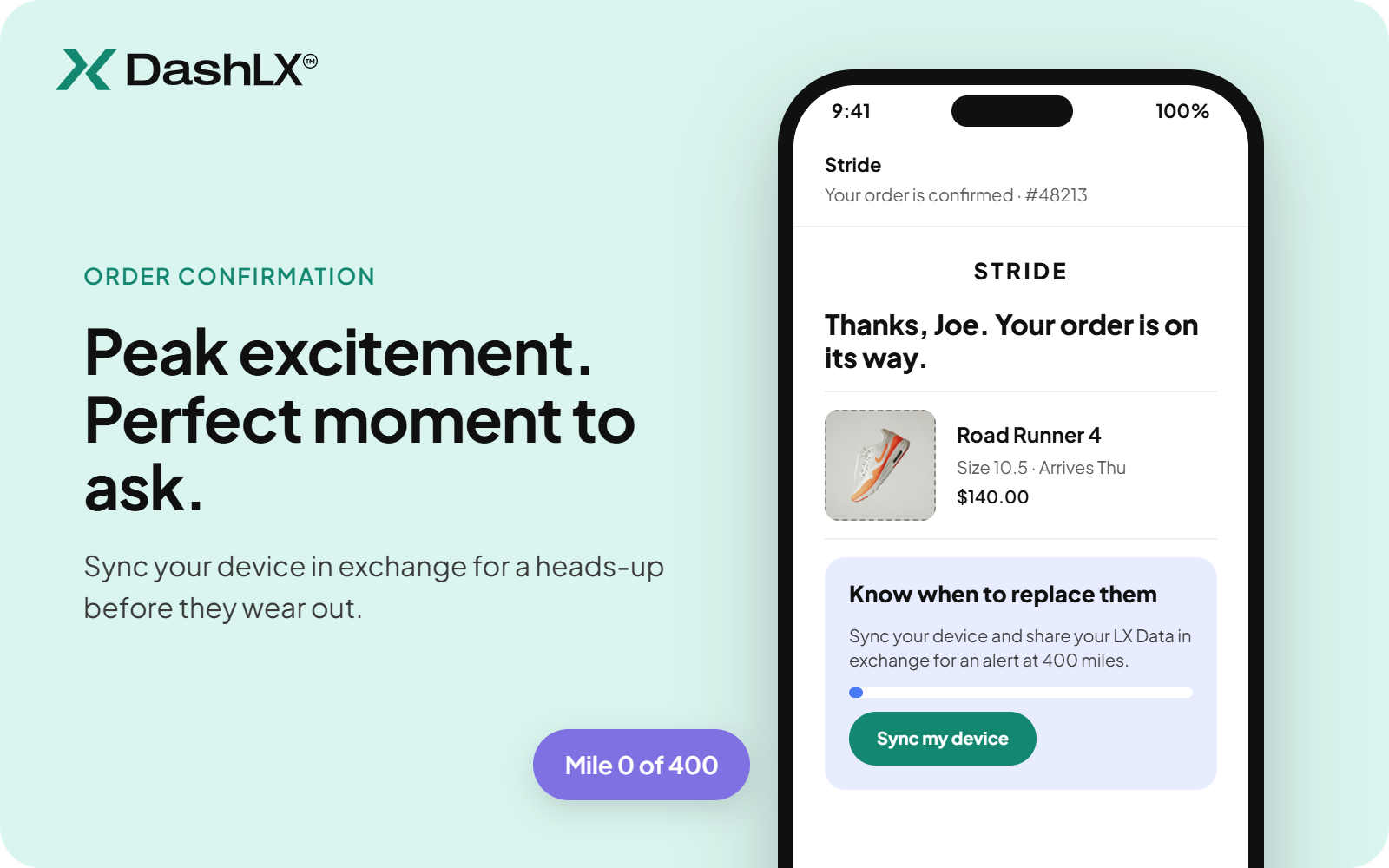
Order confirmation
Right after purchase, when excitement is high.

Abandoned cart
A pop-up offers a product pick based on real activity.

Gear & shoe finder
A recommendation based on how they actually train.
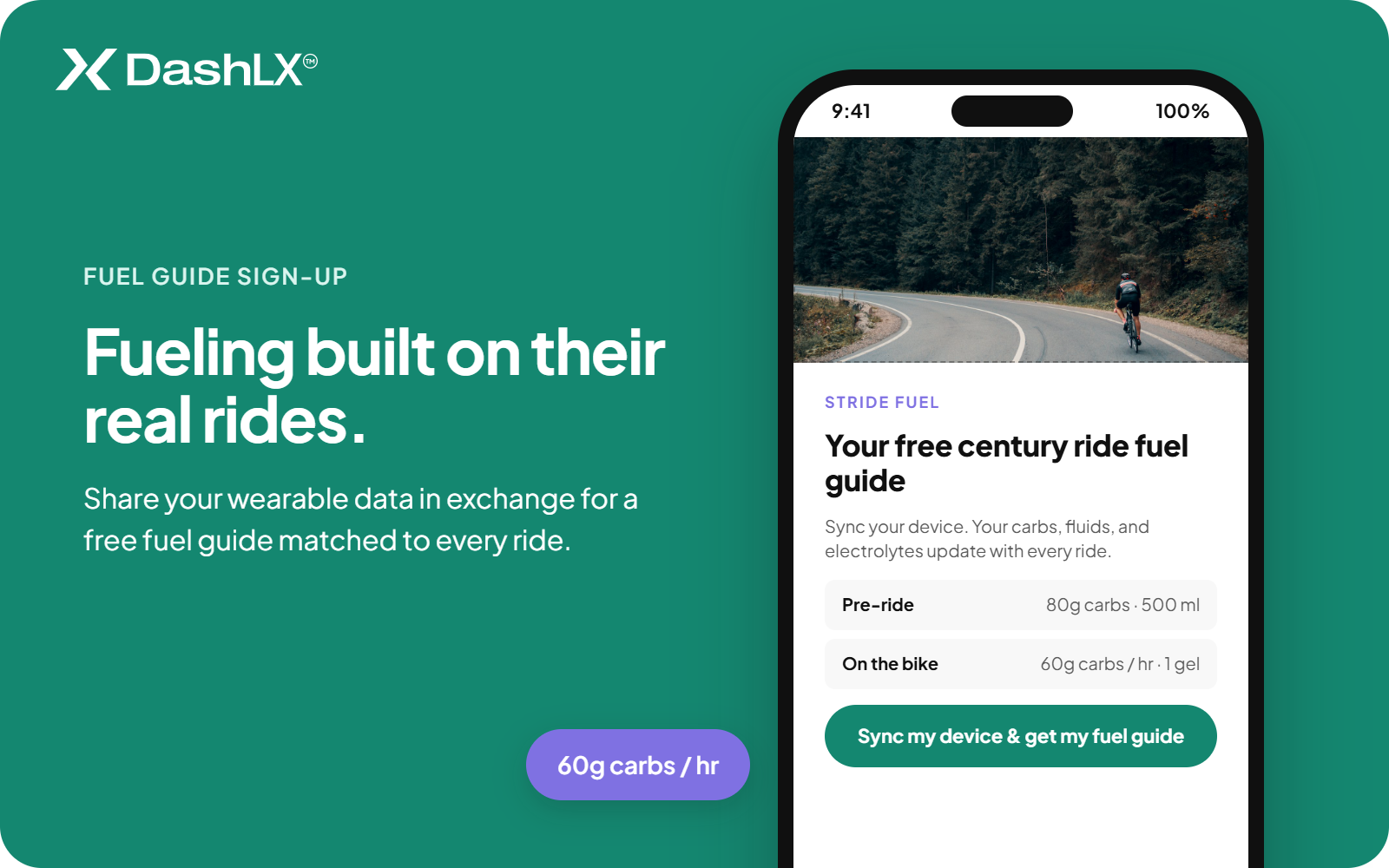
Training guide sign-up
For nutrition brands: a guide that changes with training.
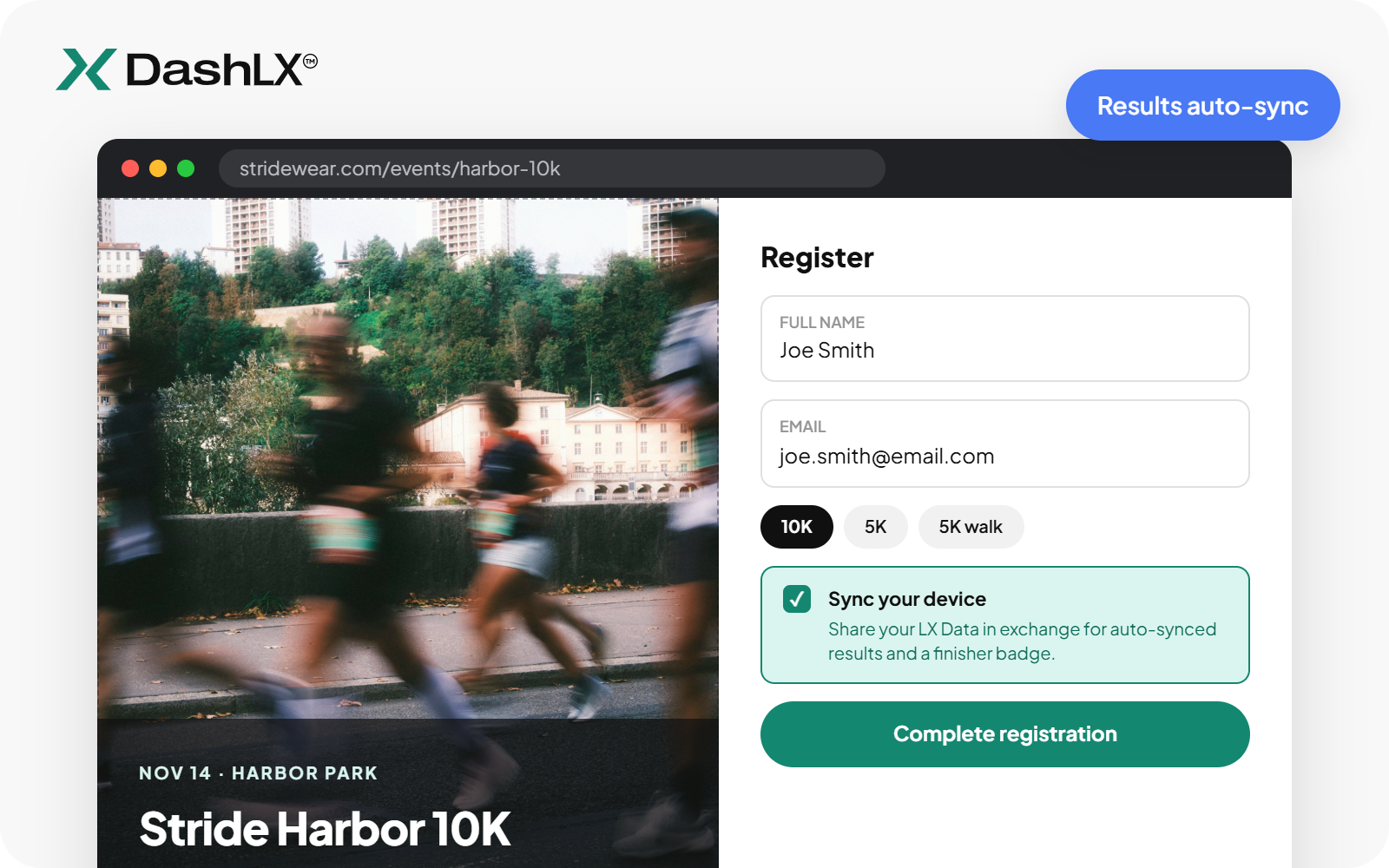
Event page
Races, pop-ups, and activations.

QR in the box or sample pack
Always on, right before the first run.
Strongest where people already track
Not just running. Coverage follows how often people record a sport on a watch or app, so the most-tracked sports give the richest data.
Walking, running & hiking
The most-tracked activities, recorded by nearly every watch and app.
Cycling
Widely tracked on watches and cycling apps.
Strength & gym workouts
Strength, HIIT, and indoor cardio. One of the fastest-growing activities people log on their watch.
Swimming & court sports
Tracked by many watches, though fewer people record them. Racket sports are growing the fastest.
Field sports
Harder to capture on a watch. Talk to us about your sport.
Coverage levels reflect how often each sport is recorded, based on published activity reports from leading fitness apps and wearable brands.
Get the full picture of DashLX
Schedule a call with our team to see how DashLX works, how customers opt in, and which use cases fit your goals across marketing, loyalty, ecommerce, and product.
Frequently asked questions
What does opting in mean?
A customer connects their watch, fitness app, or phone to your brand and agrees to share their activity data with you. It takes about a minute, and they can stop anytime.
If we invite 100 customers, how many will opt in?
It depends on the three levers: what you invite them into, how you promote it, and what they get. Loyalty programs with a clear challenge and reward see far higher opt-in than a footer link alone. Most brands start with their most engaged members, show results, then invite more people.
Is this a research panel? Does DashLX bring its own users?
No, and that's by design. Your program is built from your own customers and community, people who already know your brand, so every connection strengthens your relationship with them.
What if customers don't have a wearable?
No watch needed. Customers can connect the health or fitness app on their phone, so anyone who tracks a walk, run, or ride can take part.
What does the customer see?
Your brand. DashLX works in the background, like the secure services apps use to connect to a bank account. We handle permissions, opt-outs, and data security. SOC 2 Type II attested, GDPR and CCPA compliant.
Will this feel intrusive to customers?
Customers choose to share and can stop anytime. You decide how personal your messages get, from simply better timing to celebrating a specific run. Most customers welcome it when they get something back.
Does this only work with our existing customers?
No. People can opt in when they register for an event, visit an activation, or join a challenge, which brings new customers from any channel into your program, not just existing buyers.
Do wear testers have to log anything?
No. Testers connect once when they apply. Miles and activity sync automatically, and a survey arrives right after an activity is tracked.
What are you inviting your customers into?
Bring one audience and one reward. Our Customer Success team helps you design the program and plan recruitment.
Book an intro call