A marathon, Global Running Day activation, or community challenge creates something powerful: thousands of individual efforts adding up to one shared experience.
But most event marketing misses the moment. Brands promote the event, then wait until it's over to send a static recap email. Real-time community stats change that. Powered by Lived Experience Data, they show what customers and the entire community are accomplishing as it happens throughout the entire event.
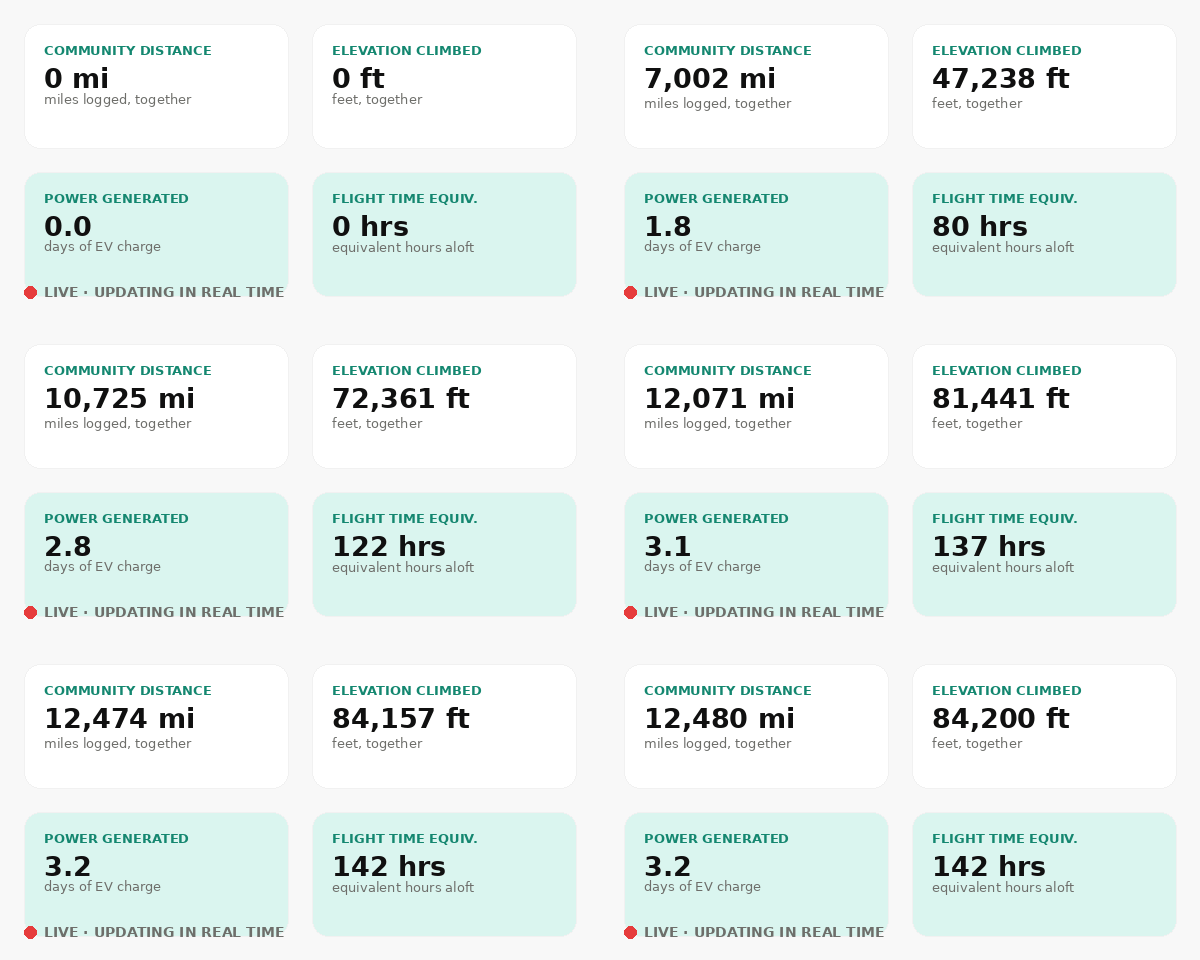
For one DashLX partner, a Global Running Day email combined each member’s personal results with live community totals that changed every time the email was reopened.The result: Members reopened the email an average of six times throughout the day, which is 6x the industry’s usual definition of a successful send. The community total climbed from thousands in the morning to well past six figures by the end of the day.
What Are Real-Time Community Stats?
Real-time community stats are live, continuously updated totals powered by Lived Experience Data, or LX Data. LX Data unifies permissioned wearable signals, activity context, and environmental data with a brand's existing customer data. It shows how customers actually live, move, and engage in the real world, not just what they click or buy.
During a marathon weekend, Global Running Day activation, Strava community challenge, or similar event, DashLX brings individual activities together into one live view of the community's progress.
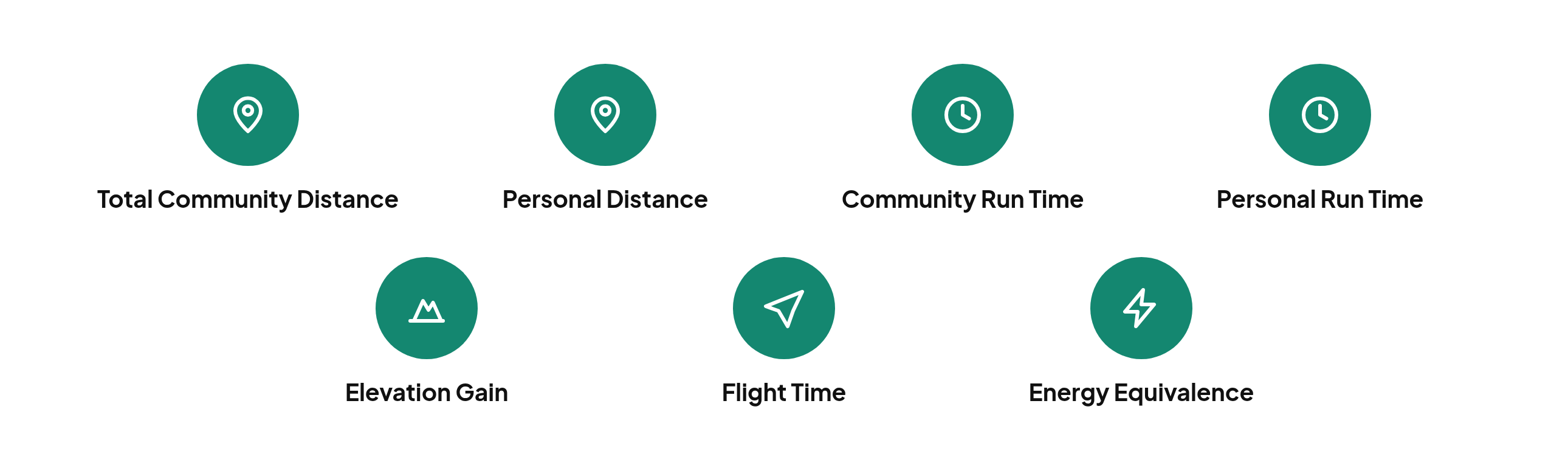
The Seven Metrics Behind a Live Community Stats Email
Each one is pulled from members' real, opted-in activity, captured as it happened:
- Total community distance adds up the live running total across every participating member
- Personal distance is the individual member's own activity for the day
- Community total run time is the cumulative time logged across the whole community
- Personal run time captures the member's individual session length
- Elevation gain totals the climb logged by every member combined
- Flight time, the cumulative time members spent airborne mid-stride, is a biomechanical signal captured by GPS-enabled wearables
- Energy equivalence reframes total distance into kilometers an EV could cover, a number anyone can feel
DashLX collects the wearable data across devices in real time, so every new activity updates the community story and shows participants how they helped shape it.
Event Marketing Emails: Before and After Real-Time Wearable Data
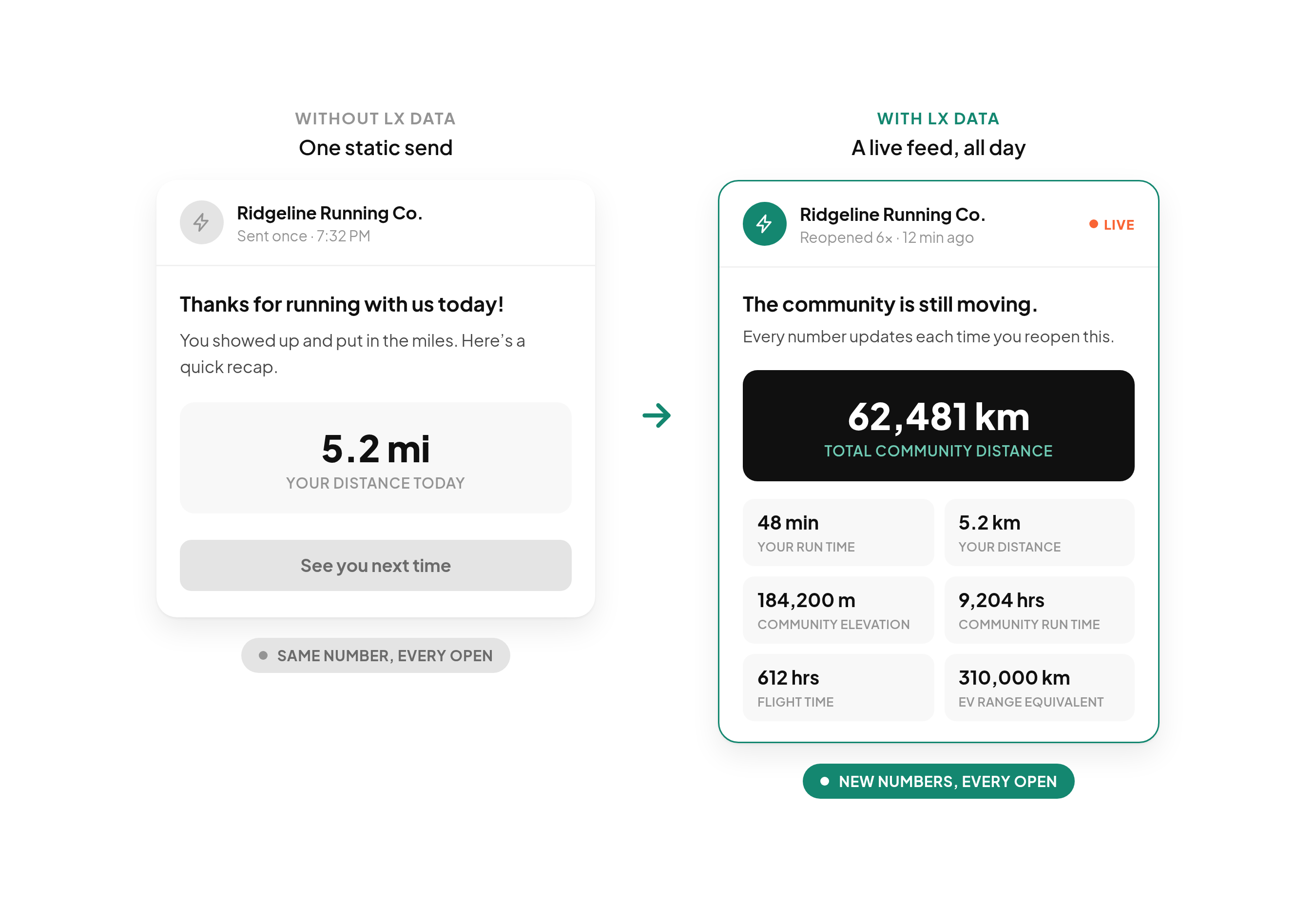
Without LX Data, an event-day email is a one-time send: a thank-you note, a static recap of the brand's own numbers, or a generic reminder to log an activity. It goes out once, says the same thing to everyone, and looks identical whether a member opens it in the first minute or two days later.
With LX Data, the same email becomes a living feed. Because it's built on real, opted-in activity data streaming in from wearables in real time, the content itself changes with the community's behavior: the numbers climb, the story updates, and the member has a reason to come back and check again.
That shift, from a single static message to a live one, is what turns an ordinary event send into something people reopen throughout the day, and it's the difference between an email a brand sends and an experience a member chooses to revisit.
Why Reopens Matter More Than Opens in Event Email Marketing
The standout metric wasn't opens. It was reopens, the number that actually shows whether a message stuck. That's not communication anymore. It's a live experience people choose to come back to, the same way they'd refresh a scoreboard during a game they care about. And because every reopen was one more chance to watch the community total climb, members didn't just check in. They shared it.
How DashLX Powers Real-Time Community Data
None of this works off a batch report or a next-day recap. It works because DashLX connects opted-in Lived Experience Data from wearables and apps directly into brand systems as it happens.
DashLX captures pace, distance, elevation, heart rate, and movement signals the moment they occur, normalizes them across every device and platform, and feeds a single unified total back into the email in real time. That's the gap most outdoor brands never close: they know what a customer bought, but not what a customer did. wearable data use cases closes it.


-Photoroom%201.png)

.svg)