TL;DR for Busy Leaders
The Era of Connection: From “Better Together” to “Smarter Together”
At The Running Event 2025, the industry rallied around “Better Together.” Collaboration. Community. The shared mission to help runners move farther, faster, healthier. But as DashLX’s CEO and leaders from Nike, Facebook, and Brooks pointed out on stage, the next evolution isn’t just being “better together”—it’s being smarter together.
Because the truth is this:
Runners are already telling you everything you need to know about how your products perform. Most brands just aren’t listening yet.
Wearable data, AI, and real-world product usage now give running brands something they’ve never had before: the ability to build closed-loop personalization systems that learn from every mile, every stride, every terrain choice, and every breakdown moment. The same compounding learning loops digital giants have used for years are finally available to physical product brands.
And when you feed real-world behavior back into your marketing, loyalty, and product strategy?
You move from broad messaging to “Hey, we know exactly how you run and here’s how we can help you run better.”
That’s where retention, loyalty, and LTV start to compound like your strongest athletes in a training block.
What’s Wrong With Personalization Today
Marketers today face a paradox: more data than ever, yet less clarity about who their customers really are.
The result: campaigns that sound like your competitors, messages feel predictable and repetitive, and offers are mistimed or irrelevant.
Customers want something more. They expect every interaction to feel contextual, timely, and relevant to their current reality, not just their purchase history.
82 % are willing to share data for a more customized experience.
This disconnect creates three costly outcomes:
- Lost Relevance: Messages and offers that don’t reflect who your customers are right now lead to lower engagement, weaker retention, and fewer repeat purchases.
- Missed Differentiation: When every brand uses the same data, personalization starts to sound the same. LX Data gives you a new layer of insight to stand out with hyper-personalized messaging competitors can’t replicate.
- Eroding Loyalty: Customers gravitate toward brands that “get” them and stay longer with those that show up at the right time, with relevance and authenticity.
Example:

This is some text inside of a div block.
Hey Sally! New release of running gear perfect for running in Florida!
Sally moved to Colorado and switched to cycling months ago.

Personalization with Lived Experience (LX) Data
Nice work, Sally, 15 miles down the mountain! You’re halfway to your 35-mile goal. Here’s 25% off and gear recs tuned for your current terrain and temps.
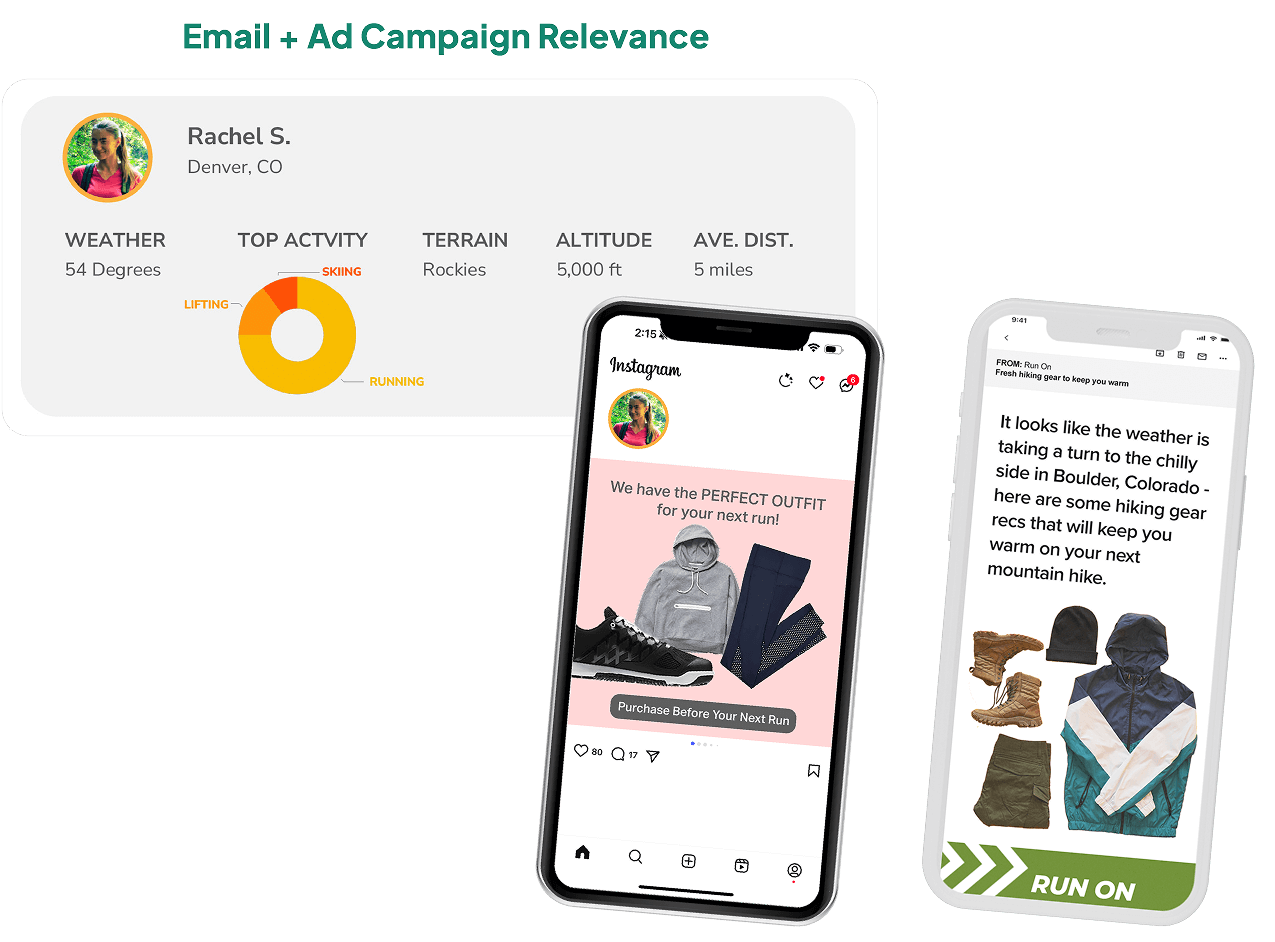
LX Data layers wearable signals with context (terrain, weather, location) for precise, real-time relevance.
The Missing “In Between” Insight
Take a hard look at your customer data and insights right now. Then answer these questions:
- Who are your customers when they’re not shopping?
- How are they using your products after the purchase?
- When are they most likely to switch brands and what signals indicate it’s time to re-engage?
- What other products do you know they’d be interested in based on how they spend their time?
Most brands can’t answer these questions because their data stops at the transaction. But real loyalty isn’t earned at checkout, it’s built in the in-between moments.
How Wearable Data Closes the Customer Experience Gap
AI-driven personalization has evolved. In 2025, leading brands are driving measurable growth through individualized experiences powered by wearable and contextual data.
The next wave of competitive advantage lies in understanding how customers live, those post-purchase experiences, workouts, and achievements, not just what they buy.
That’s where Lived Experience (LX) Data comes in.
LX Data is a combination of real-world signals from wearable devices and environmental context data (like weather, terrain, elevation, etc.), that turn activity into actionable insights.
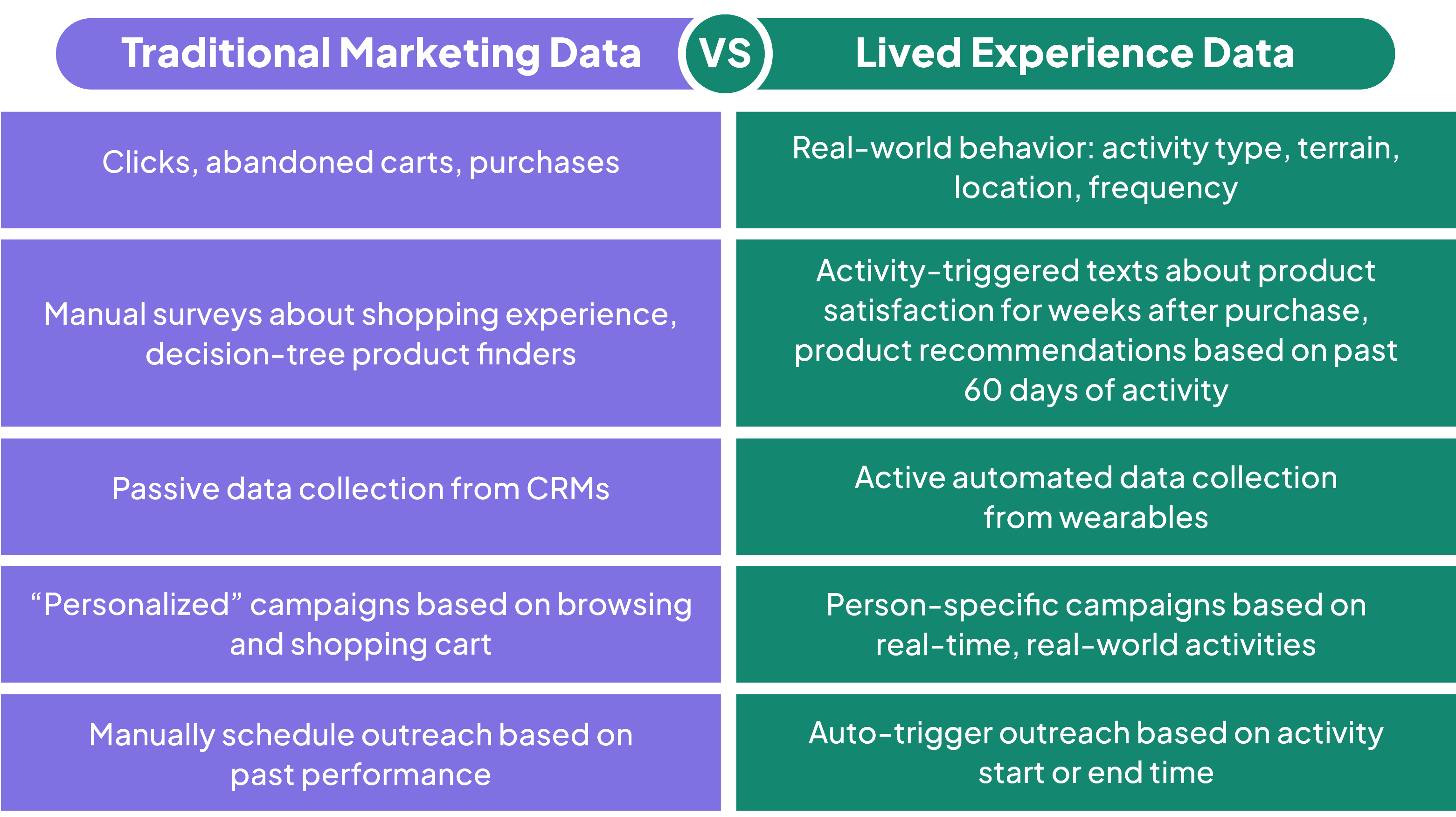
This gives brands the ability to understand customers as they move, train, and live in real time. And when connected with their SMS and email systems, LX Data allows brands to respond in the moment, with a hyper-personalized message based on real-behavior.
When connected to your existing CRM, CDP, and marketing tools, LX Data enables engagement that’s:
- Real-time: Triggered by real-world behavior.
- Contextual: Relevant to location, weather, and timing.
- Human: Rooted in genuine motivation.
Imagine sending a “Congrats on 25 miles this week!” message with an invite to a local running event, instead of another generic “We miss you” email.
That’s not just personalization. That’s connection.
The Right Data Mix for Human-Centric Personalization
To achieve meaningful personalization, brands need a complete data ecosystem, one that balances transactional, behavioral, and volunteered information.
- Purchase Data (baseline): The starting point for journey mapping and lifecycle triggers.
- Wearable Device Data (real-time): Know when customers finish a workout, hit a milestone, or shift activity types based on direct signals from devices.
- Lived Experience Data (holistic): Combine multiple wearables with environmental context — weather, terrain, GPS, and activity patterns (down to the second) — to deliver deep insights about not just what activities they do but when, where and how they like to do them.
- Zero-Party Data (opt-in): Customers share goals and lifestyle details willingly in exchange for better experiences that strengthens consent and trust.
To achieve meaningful personalization, brands need a complete data ecosystem, one that balances transactional, behavioral, and volunteered information.
The Real Power of AI Personalization Trained on Wearable Data
Here’s where the strategic layer kicks in. It’s not just about AI, it’s about AI + Lived Experience Data.
AI alone isn’t enough. It’s only as good as the data it learns from.
When trained on LX Data, AI transforms from a prediction engine into an empathy engine.
With LX Data, marketers gain visibility into what happens after the sale, transforming real-world activity into real-time action.
4 Use Cases for Personalization with Lived Experience Data
LX Data lets you personalize around how customers actually live, increasing engagement rates, repeat purchases, and CLV. Below are four examples of how the biggest brands are turning LX Data into personalization.
1) Product Recommendations Tied to Real-World Activity
78% of consumers say personalized communication makes them more likely to repurchase
— McKinsey
Digital-only recommendations get stale fast. LX Data keeps them fresh and useful:
- Email new thermal gear ahead of a cold snap or when their plane lands in a new location.
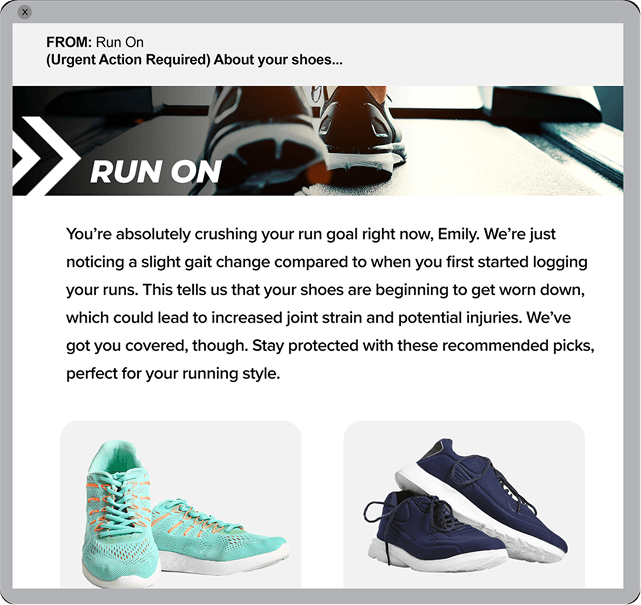
- Recommend trail shoes after a week of mountain runs with the right tread, weight and waterproofing that match how they run.
- Trigger a “25-mile week” congrats email with relevant gear or a congrats when they’ve successfully stuck to a new workout regimen for three weeks straight.

Result: Recommendations match what customers are doing today, not months ago.
2) Automated Engagement Triggered by Activity Behavior
Go beyond cart reminders or site visits. LX Data lets you engage at the perfect moment:
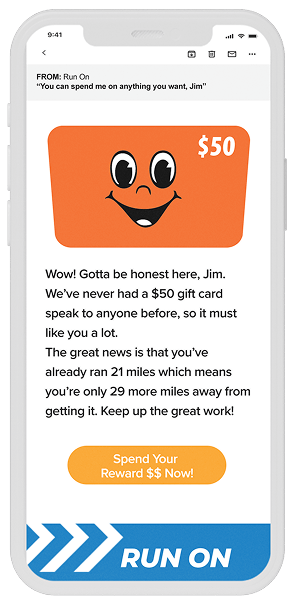
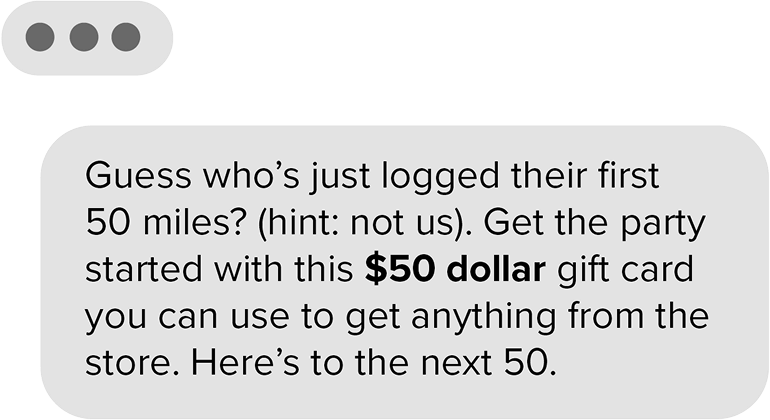
- Fire a congrats message the moment someone hits a milestone (e.g., 25 running miles) with a reward.
- Nudge lapsed athletes who went quiet for a month, plus refresh their gear picks.
- Detect a shift from running to skiing and adapt the content, offers, and products.
Proven impact reported by brands using LX-triggered engagement:
- +59% revenue among loyalty members
- +230% higher message engagement
- 60–90 days to measurable results
3) Beyond “More Content”: Experiences That Actually Convert
40% of advertising budgets are wasted on the wrong audience
— Nielsen
Publishing more content won’t fix irrelevance. LX-powered AI transforms experiences instead:
- Targeted ads aligned to current activity and terrain.
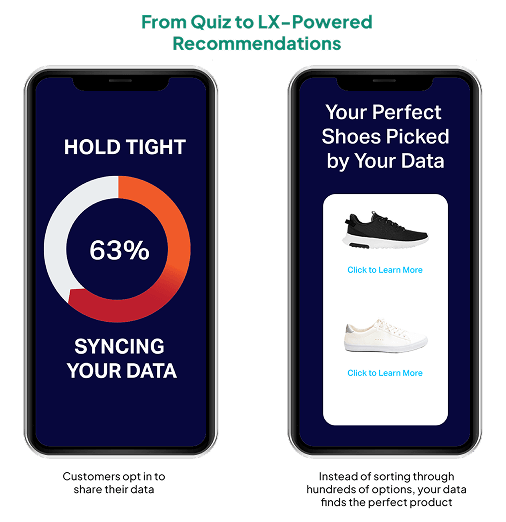
- Frictionless online shopping where preferences flow from devices, not quizzes.
- Lifestyle-fit recommendations that reflect goals and daily behavior.

Result:
Personalized content and recommendations that feel custom-built for every individual.
4) Turns Everyday Actions into Human Moments
Every “workout logged” or “goal achieved” is a micro-opportunity for connection. LX Data turns these everyday actions into authentic engagement moments that feel earned, not automated.
DashLX enables brands to transform real-world behaviors into human-centric interactions:
- Send personalized “you did it!” messages tied to real achievements.
- Trigger timely rewards when customers hit milestones or goals.
- Build community around shared passions, not just purchase history.
AI Personalization with Current Data vs. LX Data
Personalization with Current Data
Personalization with LX Data (Wearable / Environmental)
“Time to buy running shoes again — it’s been almost a year.”
“100 miles in the books, Sally! Here are shoes dialed for those Colorado Rocky trails you’ve been running lately.”
New-release shoe ads based on age/gender or past browsing
Trail-shoe and cold-weather gear after LX Data shows a shift from California pavement to Colorado mountain terrain
“Congrats on one year! Here’s 10% off.”
“Congrats on your 50th workout this year! You’ve unlocked access to our next wear test.”
“Customers who bought this also bought that.”
“We’re seeing more hill work this month—these high-traction shoes can help on steep inclines.”
SMS the moment Sally crosses the NYC Marathon finish line; reward with free merch at the booth
Every touchpoint is powered by business insight tools and AI-driven signals built on live, year-round lifestyle data. LX Data makes your recommendations smarter, your timing better, and your brand impossible to ignore.
Why Closing the Customer Experience Gap Drives Growth
Customers don’t want more messages; they want better conversations. They expect brands to understand them, anticipate their needs, and connect at the right time, in the right tone, on the right channel.
Brands that close the communication and personalization gaps see:
LX Data creates more than just personalized messages; it creates meaningful, real-time connections that turn every customer into a lifelong fan.
The future of personalization isn’t more automation. It’s real-time empathy powered by real-world data.
Conclusion
Brands that continue to rely solely on transactional or digital data will watch the Customer Experience Gap widen. The future lies in live behavioural signals, contextual insights, and AI powered by real-world data.
With DashLX, you can bridge the gap:
Integrate wearable and lifestyle data into your CX stack, trigger real-time engagements that matter, and build loyalty from the in-between moments, not just at checkout.
FAQs
1. How does wearable data differ from traditional customer data for personalization?
Wearable data captures what customers are doing right now, their workouts, movements, location, and conditions, instead of what they did in the past. Traditional data shows purchase history or clicks, while wearable data reveals real-time behavior and intent. This makes personalization more relevant, contextual, and human, aligning with how customers actually live, not just how they shop.
2. What are the benefits of using wearable data for real-time customer engagement?
Wearable data allows brands to engage at the perfect moment, for example, after a run, during a workout streak, or when activity levels shift. These real-time signals help brands send meaningful messages, rewards, or product recommendations that match customer context. The result: higher engagement, stronger loyalty, and increased repeat purchases.
3. How can brands use wearable data to close the customer experience gap?
The customer experience gap is the disconnect between what customers expect and what brands deliver. By integrating wearable data into personalization strategies, brands can respond to real-world activity, like training sessions or travel, instead of relying on static purchase data. This bridges the gap between digital interactions and lived experiences, creating authentic, timely engagement.
4. How does AI use wearable data to create more human-centric brand experiences?
AI powered by wearable data analyzes real-time behavior to understand motivation and context, not just past purchases. It learns when customers are active, resting, or achieving goals and delivers personalized experiences that feel empathetic, not automated. This transforms AI from a prediction engine into a connection engine that builds trust and loyalty.
5. Is wearable data safe and compliant for marketing personalization?
Yes. When used correctly, wearable data is privacy-compliant and fully consent-based. Brands must request opt-in data, protect it securely, and ensure transparency under standards like GDPR and CCPA. Ethical personalization builds trust, giving customers better experiences while keeping their information protected.
6. What key metrics improve when brands leverage wearable data for personalization?
Brands using wearable data for personalization see measurable improvements in retention, engagement, and customer lifetime value (CLV). Real-time triggers based on actual behavior result in +59% revenue growth and +230% higher engagement for loyalty programs. Wearable-driven personalization aligns messages with moments that matter, boosting satisfaction and sales.
7. What is the Customer Experience Gap?
The Customer Experience Gap is the disconnect between what customers expect and what brands actually deliver. Most personalization relies on outdated digital data, like past purchases or clicks, so messages feel generic and out of touch. DashLX closes this gap by using real-world signals from wearables and environmental context to personalize engagement in real time. The result: more relevance, stronger loyalty, and experiences that match how customers actually live today.
-Photoroom%201.png)
.svg)